
The Tribute
Ray Dalio came back from China talking about tribute type relationships with Beijing. Two weeks earlier the US government pulled the most capable AI models on earth under export controls. The sovereign AI conversation that followed revealed an uncomfortable truth: the only frontier AI that ships without a foreign government's export licence is Chinese. The pattern connecting all of this has been running for two thousand years.
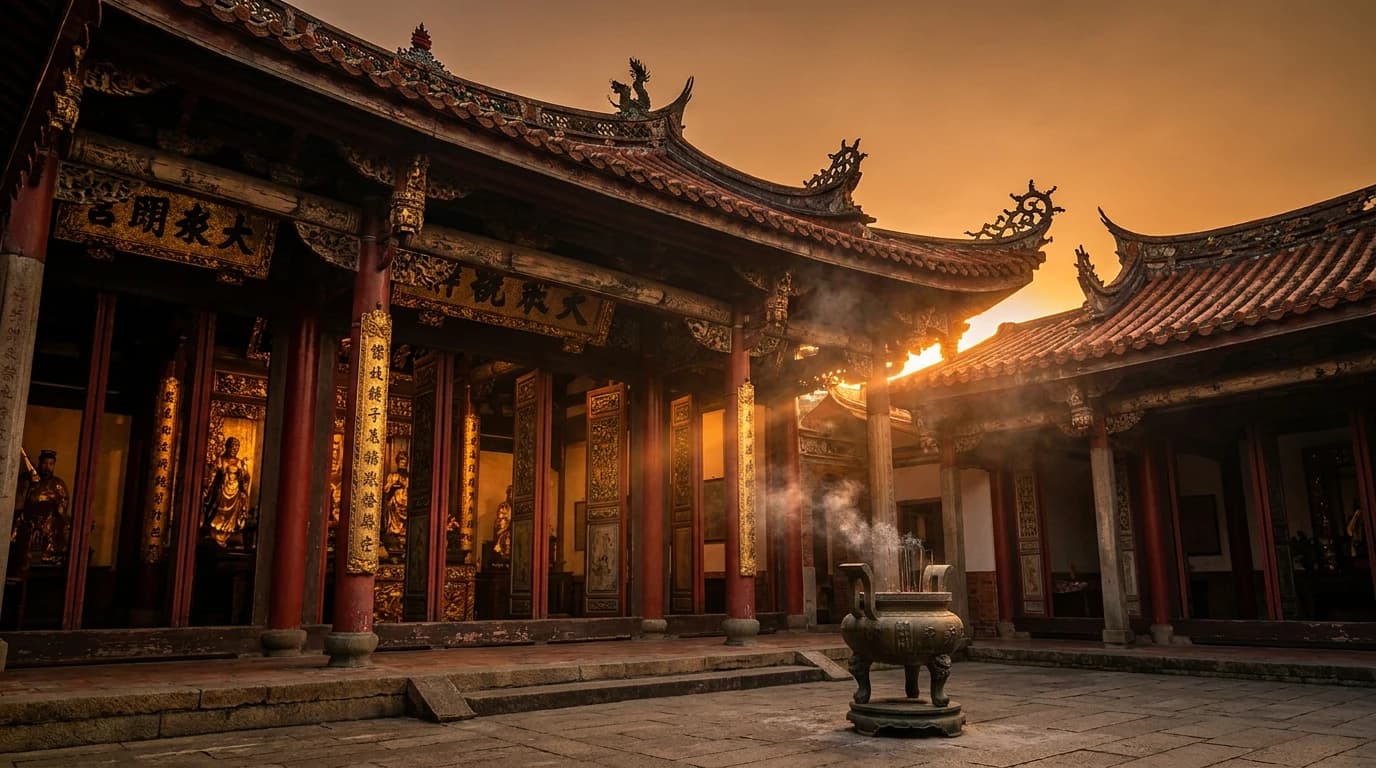
Twenty years ago my days started in Taipei reading the Straits Times that would headline the latest skirmishes with China and observing the progress of Taipei 101 as it rose out of the city. For as long as I can now remember the tension in the East has been a reality that most of us in the West are unaware of.
Last week Ray Dalio came back from a ten day trip to China and put a framework around it. World leaders, he wrote, are forming "tribute type relationships" with Beijing. Not military alliances. Something older than that.
For roughly two thousand years, China's foreign relations ran on a system where smaller powers acknowledged Chinese primacy in exchange for trade access, diplomatic recognition, and above all, stability. It was transactional, hierarchical, and it worked because the dominant power's product was order. Show up, pay respect, do business.
Britain's Opium War broke that system in 1839. What followed was a century the Chinese call the Hundred Years of Humiliation: foreign invasion, unequal treaties, the lot. The tribute system collapsed and never came back. Or so it seemed.
After 1945 the United States built its own version of the same underlying deal. The mechanism was different: Bretton Woods, NATO, the dollar reserve system, rules based institutions. But the contract was identical. Follow the rules, get stability, trade freely. The American century sold the same product the tribute system sold. Order.
That contract is cracking.
The Fable 5 story has been covered to death elsewhere so I won't labour it here, but the shape of it matters: on 12 June the US government ordered Anthropic to pull its most capable AI models from every user on earth, and within hours they were gone. First time export control authority had been used against an AI model.
The European reaction told the real story. Bruno Retailleau, France's interior minister: "a nation that depends on others for its technology is a nation that can be unplugged overnight." Tom Tugendhat, former UK security minister: "sovereignty is more about code than cannons."
Every one of those statements is a sovereign AI argument. And every one of them runs into the same structural problem.
If sovereign AI means running frontier models that do not depend on a foreign government's export licence, the only option that ships today is Chinese. DeepSeek publishes open weights. Neither Anthropic, nor OpenAI, nor Google offer open or distilled versions of their frontier models. The sovereign AI conversation, stripped to its practical mechanics, is a conversation about adopting Chinese open source AI. There is no western alternative in that category.
Meanwhile Anthropic alleges DeepSeek built 24,000 fake accounts and ran 16 million interactions to distil capabilities from Claude. The Trump administration called it "enormous Chinese intellectual property theft." The irony sits right there: the US restricted chip exports, which forced Chinese labs into aggressive efficiency innovation, and they responded by shipping open weight models anyone can run. The restriction produced the competitor.
And then there are the chips. TSMC in Taiwan fabricates the silicon that every frontier AI model runs on, western and Chinese alike. The sovereign AI conversation focuses on models and weights, but a model without chips is a blueprint without a table to read it on. The entire AI industry depends on fabrication capacity located a stone's throw from a country that has spent decades making clear it intends to take the island back.
Dalio notes China is pursuing reunification through indirect pressure: economic, diplomatic, financial. Sun Tzu's principle: subdue without fighting. And as China approaches chip self sufficiency, estimated by late 2027, Taiwan's leverage as the world's foundry begins to shift.
I build AI systems for businesses. What I need from the policy environment is the same thing merchants needed from the tribute system two thousand years ago: predictability. A stable set of rules that hold long enough to build something on top of.
The last eighteen months have delivered the opposite. Tariff whiplash, shifting regulation, energy and price shocks and now a precedent where the most capable AI tools in the world can be switched off overnight under export authority. Any business that is building operations upon a model that could be switched off overnight is now facing a new reality. The risk European politicians named applies to every business building on American AI, everywhere.
Dalio places the US in Stage 5 of his Big Cycle: decline. China in Stage 3: rise. He sees the world order shifting from a rules based, multilateral system to something bipolar, power based, and hierarchical. I am not in the business of predicting which stage comes next.
What I can see is the pattern. Tribute flows to whoever offers the most stable trading environment. The power that sells predictability attracts the market. The power that pulls the rug loses it.
The pattern has been running for two thousand years. The product on offer has always been the same.