
The freeway to the mystery house
The M1 Monash has been under construction for thirty years because cheaper trips make more trips. Software is currently doing exactly the same thing. The SaaS apocalypse is Jevons paradox playing out in real time, and what comes next is a thousand mystery houses that need specialists to keep them standing.
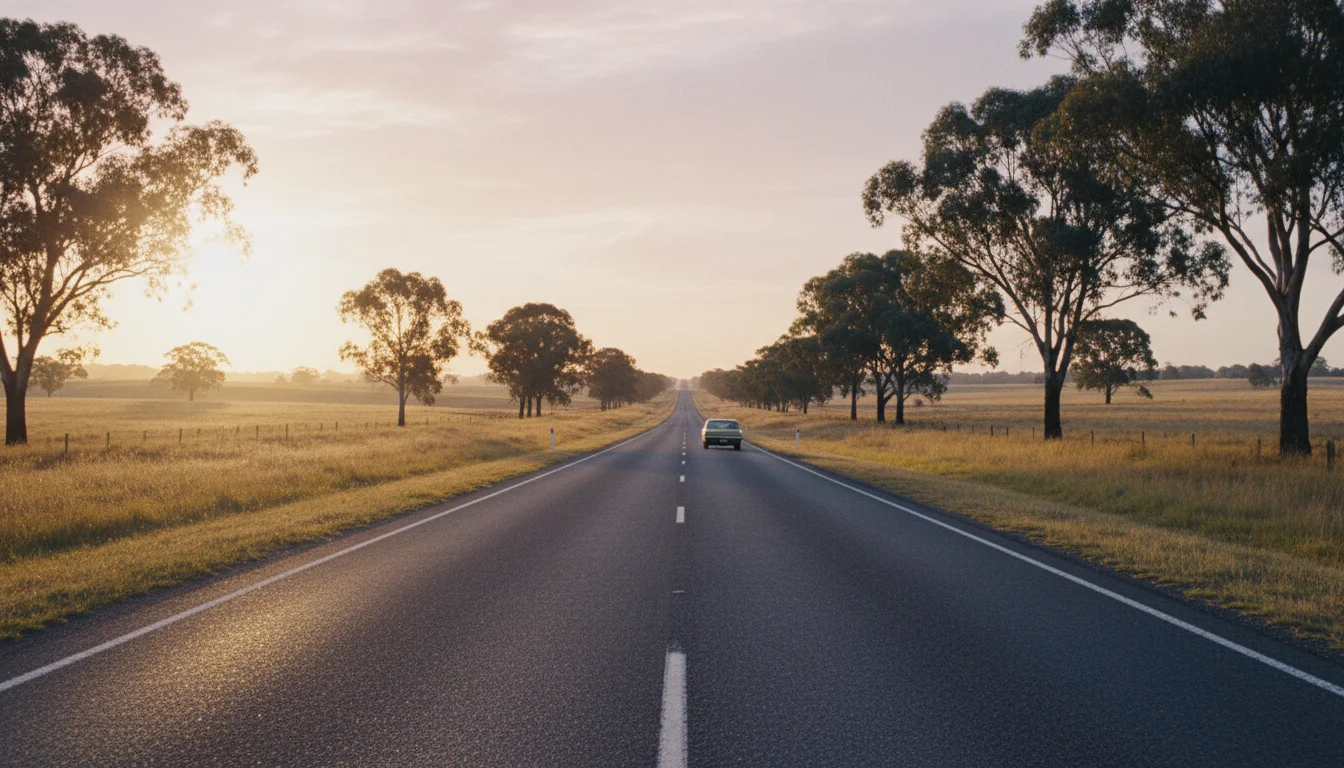
The M1 has been under construction for thirty years
The M1 Monash Freeway has been under construction for thirty years. Not a single project, but a rolling program of lane additions, on-ramp reconfigurations, and shoulder widenings that started when I was a kid and hasn't stopped. Every time a new section opened, the promise was the same: this will ease congestion. It never did. It couldn't. What happened every single time was that the people who hadn't been making the trip before suddenly started making the trip, because the trip had become possible or pleasant or quick enough to justify. That's Jevons paradox. Make something cheaper and you don't reduce demand; you unleash it. It was true for coal in 1865 and it's true for peak hour on the Monash in 2026. And it's about to be true for software.
Six months ago I set out to build a SaaS
Six months ago I set out to build my third SaaS. I'd done two before, and I thought the AI age would make the third one easier, which was a reasonable bet at the time. Then the apocalypse happened. You've heard the conversation by now. Every founder dinner, every LinkedIn thread, every Substack that thinks it's brave has the same beat: SaaS is cooked, the unit economics are finished, why would anyone pay a subscription for something an agent can build in an afternoon. I've had some version of that conversation with so many people over the last six months that I could recite both sides of it in my sleep. The consensus hardens by the week. And the consensus is missing the point.
Cheaper doesn't mean less
Cheaper doesn't mean less. That's the part everyone skips. The doomer read goes: agents will build software for a fraction of the cost, therefore fewer people will pay for software, therefore the SaaS business model collapses. Each step is defensible in isolation. The conclusion is wrong because it forgets that the expensive lane on the software freeway was always implementation, and it's about to be six-laned. What Jevons tells us is that when something becomes cheap, people find ten new reasons to use it that nobody had considered when it was expensive (...and the reverse is happening with the current energy crisis, but that's another post).
The M1 got wider and Melbourne did more trips. Software is doing exactly this: more software, built by more people, for more specific reasons, reaching further into corners of every business where manual process and pixel-pushing used to be the only economic path.
What a Tuesday looks like
I'm already living in it. This morning I did my billing by talking to my accountant agent as I had my morning coffee. We worked through the open invoices, kicked off a reconciliation across my bank accounts from the same conversation, and by the time the cup was empty the month was closed. Later I drafted a client report by talking through the shape of it with my analyst agent, who went away and built the scaffolding while I thought about what the other agents were working on. All before lunch. Yesterday my PA scheduled two meetings while I was out on my afternoon bike ride. None of this happened through a traditional interface. None of it was the product of a billion-dollar platform.
All of it happened through conversations with agents sitting behind a CLI, doing work that used to take half a day and now takes the time it takes to describe what I want. This is my mystery house.
Every business becomes a mystery house
But every business that builds this way becomes, over time, a Winchester Mystery House. The Winchester is the real house in San Jose that Sarah Winchester built for thirty-eight years, adding rooms and staircases and doors on the advice of a spiritualist, with no central plan. Staircases that lead to ceilings. Doors that open onto walls. Forty bedrooms, and nobody sure how they connect. John Allsopp surfaced this for me in last Saturday's Web Directions reading, pointing at an O'Reilly Radar piece called The Cathedral, the Bazaar, and the Winchester Mystery House, and the moment I read the title I went yep, this is the way.
Business software isn't becoming the cathedral, and it isn't becoming the bazaar. It's a thousand companies each building their own house, no two alike, most of them strange, all of them solving problems that only make sense from the inside. The old contract where you learned one application at job A and took the skill to job B is gone. Every new role is a new house.
The lanes don't fix themselves
The lanes don't fix themselves, and that's the part I keep coming back to. Melbourne didn't stop at more cars on the Monash. It built a whole ecosystem to support them: traffic engineers, signals, crews out at 2am swapping matrix boards, and people whose whole job is understanding how the system fails and getting it back on its feet by sunrise.
The freeway of cheap software is about to spawn the same ecosystem. Someone has to make the mystery houses talk to each other. Someone has to diagnose what broke when the accountant agent and the billing system lost sync at 3am. And someone has to walk into one of these specific weird companies with their specific weird shape, then the company next door, then the company after that, and glue them together without making any of them worse.
Want it or not, this is the work ahead of us. A thousand fascinating challenges as we shift from writing lines of code to orchestrating agents and software, all while keeping the lights on.